
Best all-rounder
200mm
Tobisho SR-1
Fully forged high-carbon steel
Choose it for: Regular pruning and prolonged working sessions.

Japanese Secateurs
Find the right pair
Most of these models handle general live-wood pruning well. The useful differences are hand fit, working time, construction, size and finish.
Choose SR-1 for frequent work, Type-B for value and size choice, or use the filters below for compact, ergonomic and premium options.
Showing all models
200mm
Fully forged high-carbon steel
Choose it for: Regular pruning and prolonged working sessions.

180 or 200mm
Fully forged B-pattern with rounded blades
Choose it for: General live-wood pruning with the broadest size and lock choice.

185 or 200mm
Fully forged A-pattern
Choose it for: The A-pattern shape with a choice of two lengths.

200mm
Hand-brazed A-pattern; Yasugi Steel or Yasugi Blue Paper
Choose it for: Premium steel choice and brazed construction.

165mm
Compact blades with asari on both sides
Choose it for: Small hands, confined growth and precise pruning.

195mm
Asymmetrical handles with a tilted blade
Choose it for: A more natural wrist position during general pruning.

200mm
16-layer steel with a thick Yasugi Blue Paper cutting layer
Choose it for: Premium finish, gifting or collection appeal.

200mm
Two-tone Italian vegetable-tanned leather
Choose it for: Home pruning, presentation and shorter daily sessions.
For prolonged professional use, choose the SR-1.

150mm
Compact fully forged B-pattern
Choose it for: Very small hands, light carry and close work.
| Model | Size | Construction / defining feature | Best reason to choose it | Price & status |
|---|---|---|---|---|
| Tobisho SR-1 | 200mm | Fully forged high-carbon steel | Frequent work and the clearest all-round choice | $140.00In stock |
| Tobisho Type-B | 180 or 200mm | Fully forged B-pattern; rounded blades | Value, general pruning and size / lock choice | $120.00 – $130.00In stock |
| Tobisho Classic Type-A | 185 or 200mm | Fully forged A-pattern | A-pattern shape without the brazed-model price | $145.00 – $150.00In stock |
| Tobisho Brazed Type-A | 200mm | Hand-brazed; Yasugi Steel or Yasugi Blue Paper | Premium construction and steel choice | $179.00 – $215.00In stock |
| Tobisho Hirei | 165mm | Compact; asari on both blades | Small hands, tight growth and detail work | $250.00In stock |
| Tobisho-gata | 195mm | Asymmetrical handles and tilted blade | A more natural wrist angle | $250.00In stock |
| Tobisho Damascus Type-A | 200mm | 16-layer steel; thick Yasugi Blue Paper cutting layer | Premium finish, gifting and collection appeal | $250.00In stock |
| Tobisho Ikiru | 200mm | Two-tone vegetable-tanned Italian leather | Presentation and shorter home-pruning sessions | $250.00Sold out |
| Hon Norimitsu Type-B | 150mm | Compact fully forged B-pattern | Very small hands, light carry and close work | $110.00In stock |
What the price step-up buys
Prices and availability update from the current product listings. Size is the best starting point for hand fit; construction and finish should decide between similarly sized models.
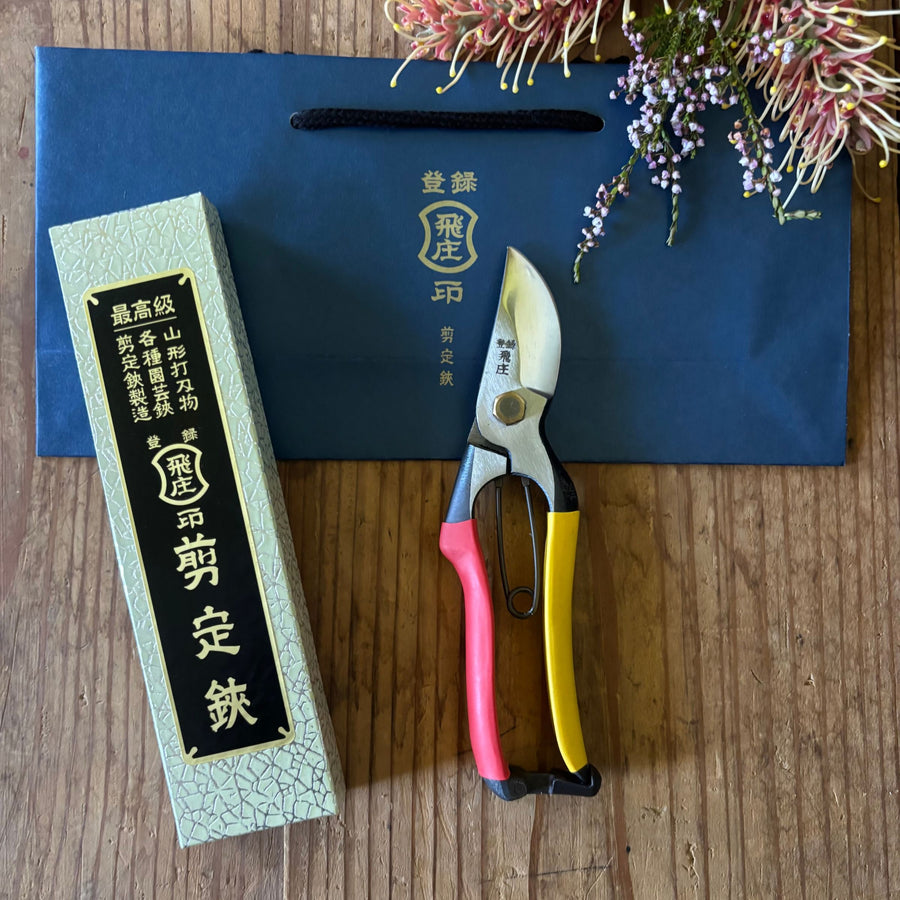
Flagship all-rounder secateurs for frequent everyday pruning. Our best seller.
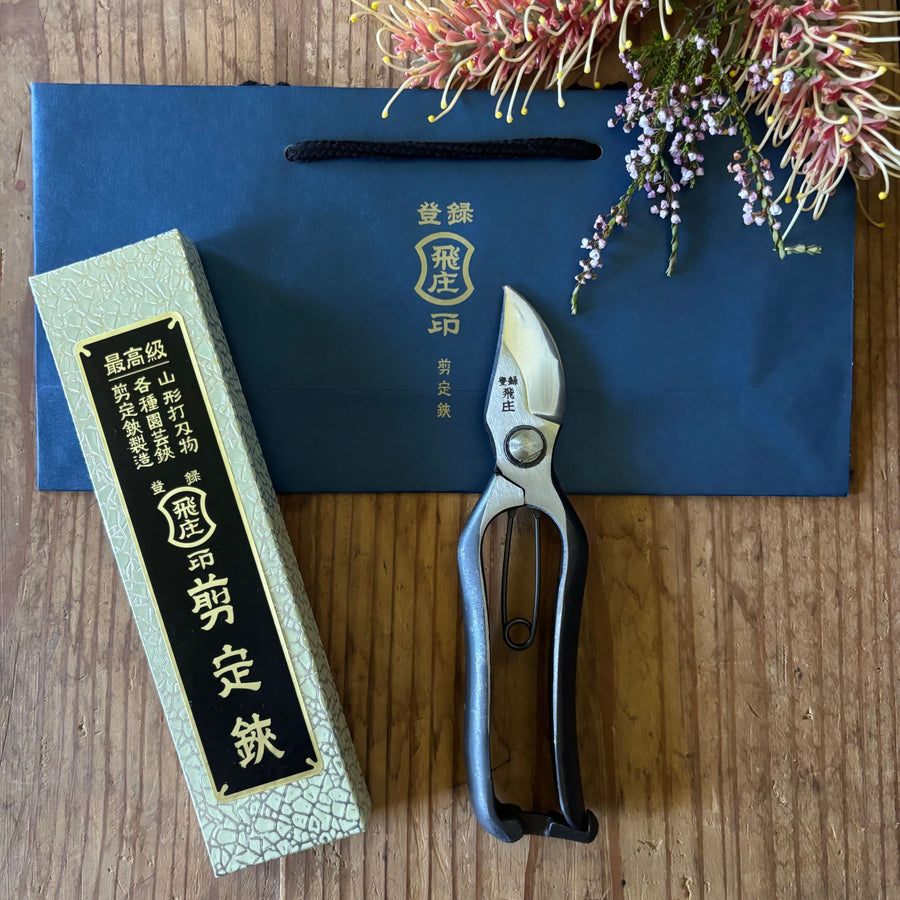
Fully forged Type-B secateurs with 180 or 200mm size and lock choices.
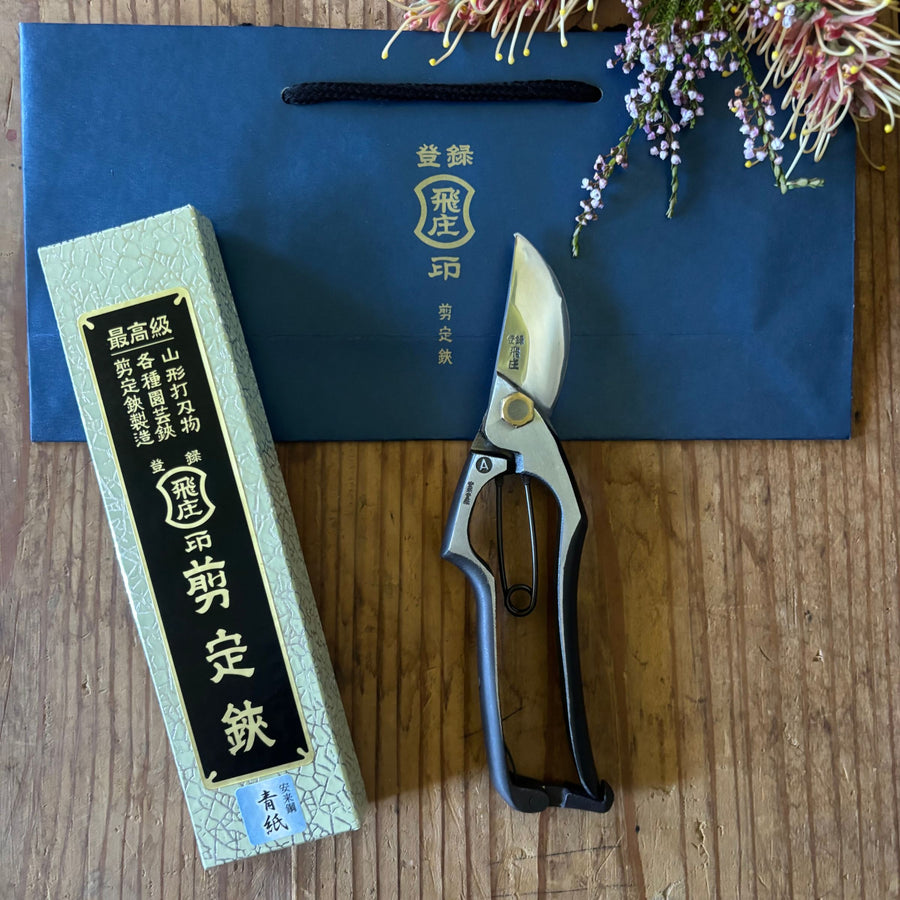
Hand-brazed Type-A secateurs with premium Yasugi steel choices.

Balanced 200mm pruners for clean everyday cuts.
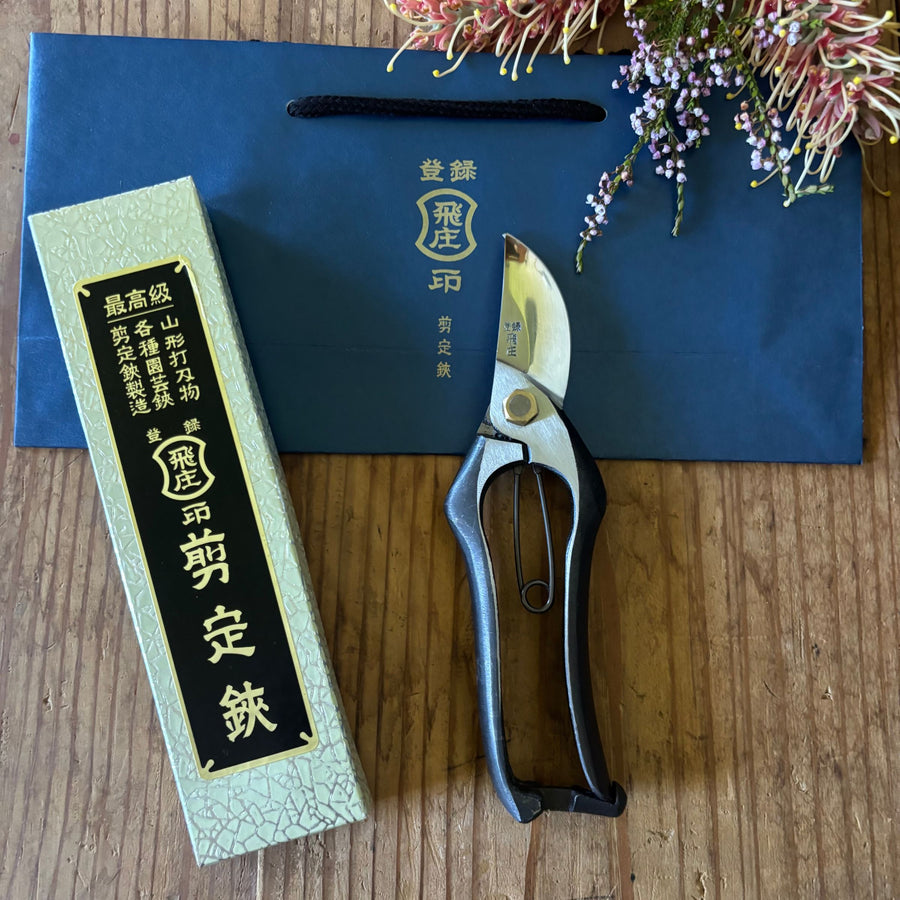
Fully forged Type-A secateurs in a choice of 185 or 200mm.

Compact 150mm Type-B secateurs for small hands and detail work.

Leather-wrapped presentation secateurs for shorter home-pruning sessions.

Fine-nose secateurs for precise cuts and tip work.


Forged Type-B secateurs for stronger pruning cuts.
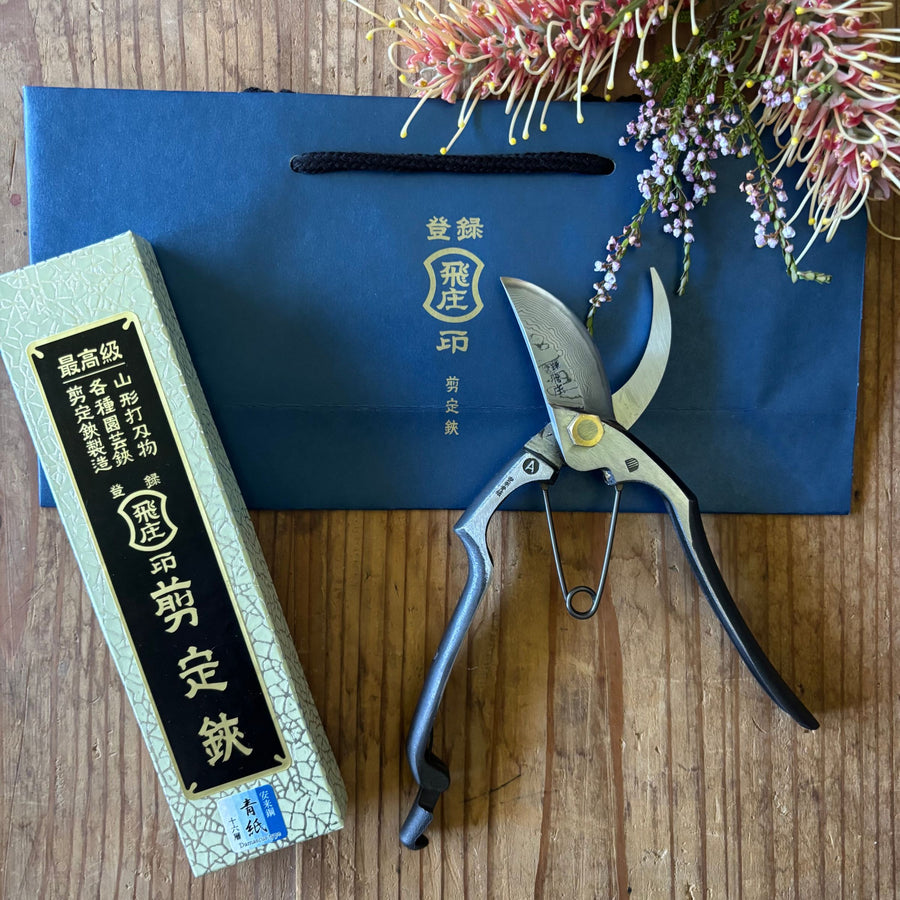
Hand-brazed Type-A with 16-layer steel and a Yasugi Blue Paper cutting layer.

Compact gold mini secateurs for fine pruning.
Built for longevity. Proper care reduces waste and improves performance over time.
Forged by skilled makers using time-honoured techniques. We buy direct from small workshops.
Orders placed before 12pm ship same day from Perth. Delivery times vary by location.