


Why the Hori Hori Knife is the one tool you're missing in the garden
If you’ve built your collection of Japanese digging and weeding tools but still feel something is missing, the Hori Hori Knife deserves its spot. This multipurpose Japanese Hori Hori knife is more than a weeding tool; it is a planting, digging, harvesting and root-cutting all-rounder. In this article we explain why this one tool from our Japanese digging tools collection earns its place, and how it works alongside Japanese sickles and weeders.
A Japanese Hori Hori knife leaning into compacted garden soil to dig a hole.
What is a Hori Hori Knife?
The term “hori” in Japanese means “to dig”. The tool known as the Hori Hori Knife or soil knife originally emerged in Japan as a digging instrument. It typically features a steel blade, sharp on both sides with one serrated edge and a semi-sharpened point.
In Japanese gardens and mountain foraging the Hori Hori garden tool was once used to extract wild vegetables and roots from uneven terrain. Over time it became popular in domestic and professional gardens across the world thanks to its versatility.
Why the Japanese Hori Hori Garden Tool matters in your toolkit
Here are some of the reasons the Hori Hori weeding tool stands out:
- It replaces multiple single-purpose tools such as a trowel, weeder and bulb planter.
- The sharp, pointed design easily penetrates hard or compacted soil and cuts through roots.
- It offers precision for planting bulbs or seedlings, thanks to measurement markings that make it more than just a digging tool.
From digging to weeding: how the Hori Hori knife’s uses span tasks
The Hori Hori knife’s uses are broad:
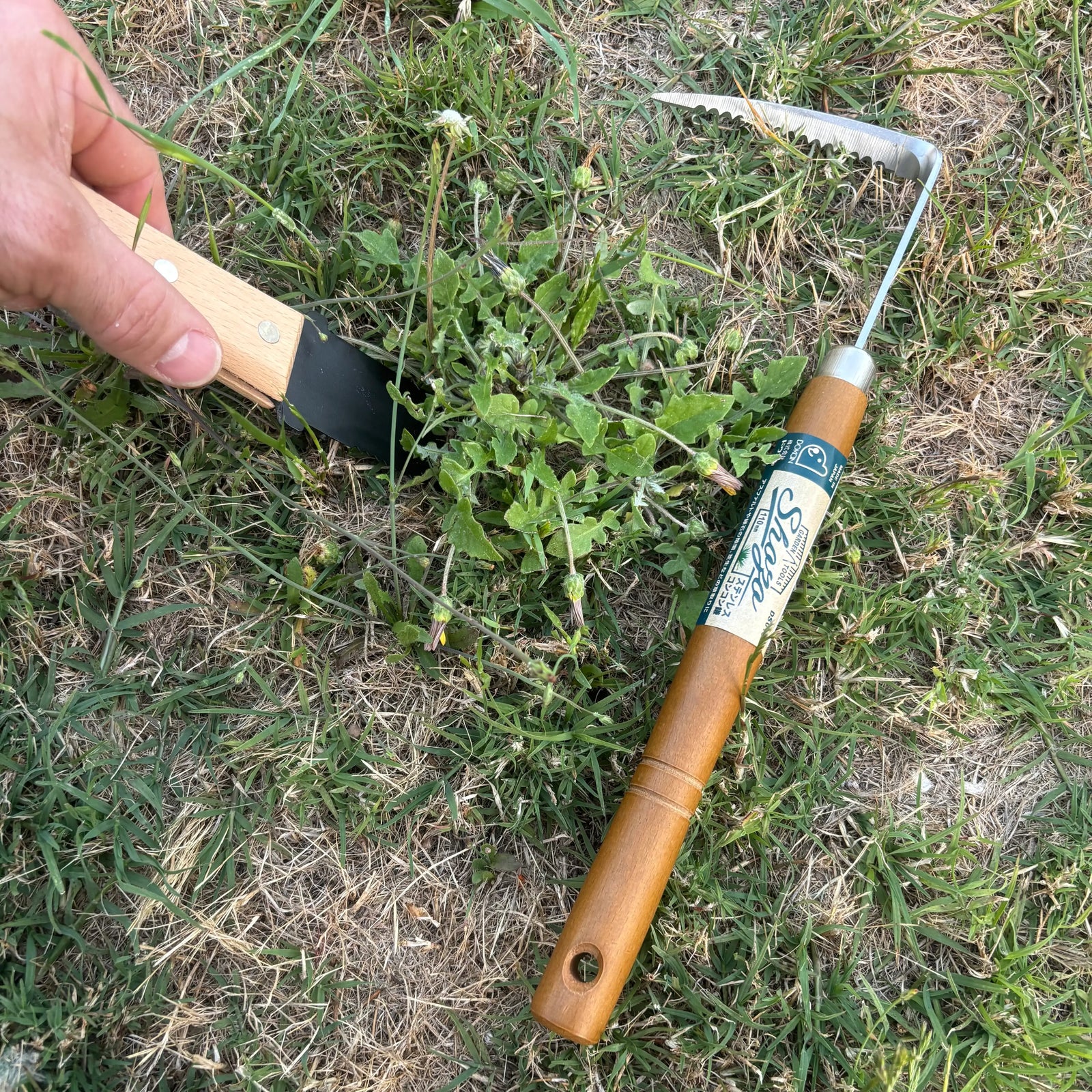
- Weeding tough tap-root plants: the blade slides beside roots and extracts them intact.
- Planting bulbs or seedlings: the pointed end and optional depth markings allow accurate placement.
- Cutting through roots or small branches: the serrated edge performs saw-like tasks.
- Transplanting and dividing perennials: the tool becomes practical for root work and soil disturbance.
That means when you pick up a well-made Hori Hori garden tool you’re effectively carrying a trowel, knife, saw and planting gauge — all in one compact implement.
Technical insight: materials, blade design and durability
Understanding materials and build quality ensures you select a tool that lasts.
Blade material: Carbon steel offers excellent sharpness but requires maintenance to prevent rust. Stainless steel provides corrosion resistance, especially useful in humid or coastal regions.
Blade design: Look for a dual-edge design, a pointed tip and a slightly concave shape to ease soil penetration and root extraction.
Handle and tang: A full tang — where the blade runs through the entire handle — adds stability and strength. Traditional models often use hardwood handles that feel balanced and natural in hand, while modern versions may use composite or rubberised grips for extra comfort and slip resistance.
Maintenance tip: Clean the tool after use, sharpen periodically, and treat wooden handles with oil to avoid cracking. Browse Japanese tool care and sharpening for oil, stones and rust care.
How to choose the best gardening knife: what to look for in a Hori Hori
When choosing the best gardening knife for your toolkit, consider these criteria:
- Blade length and width suited to your garden type.
- Sharpness and edge configuration for versatility.
- Material quality: stainless for rust resistance in coastal conditions, carbon steel for traditional edge feel with more care.
- Comfort: handle design that suits your grip and reduces fatigue.
- Sheath or holster access if you carry the tool around beds or markets.
At East West Tools our selection includes the ‘Bonsai’ brand Hori Hori Gardening Knife and the Bonsai Stainless Hori Hori Garden Knife, both built for serious gardeners.
Local relevance: using a Hori Hori weeding tool in Australian gardens
The Australian gardening context presents some unique challenges: hard clay, compacted suburban soil, shallow beds, and invasive weeds with deep roots. Here's how a Hori Hori garden tool becomes highly relevant:
- Compact urban gardens in Perth benefit from a single tool that can dig holes, remove weeds and transplant without frequent tool switching.
- The dual-edge design tackles local weeds with thick roots more effectively than a basic trowel.
- Planting native shrubs or bulbs? Depth markings help keep planting consistent in Australian soils.
Conclusion: integrate this tool into your Japanese digging tools setup
The Hori Hori Knife earns its place among the best gardening knife options for serious enthusiasts and professionals alike. By combining digging, weeding, planting and cutting functions into one trusted tool, you simplify your toolbelt and work more effectively.
Explore Japanese digging tools and consider models like the Gyokucho Hori Hori Garden Knife or the Ultimate Digging Set to round out your kit.
Leave a comment